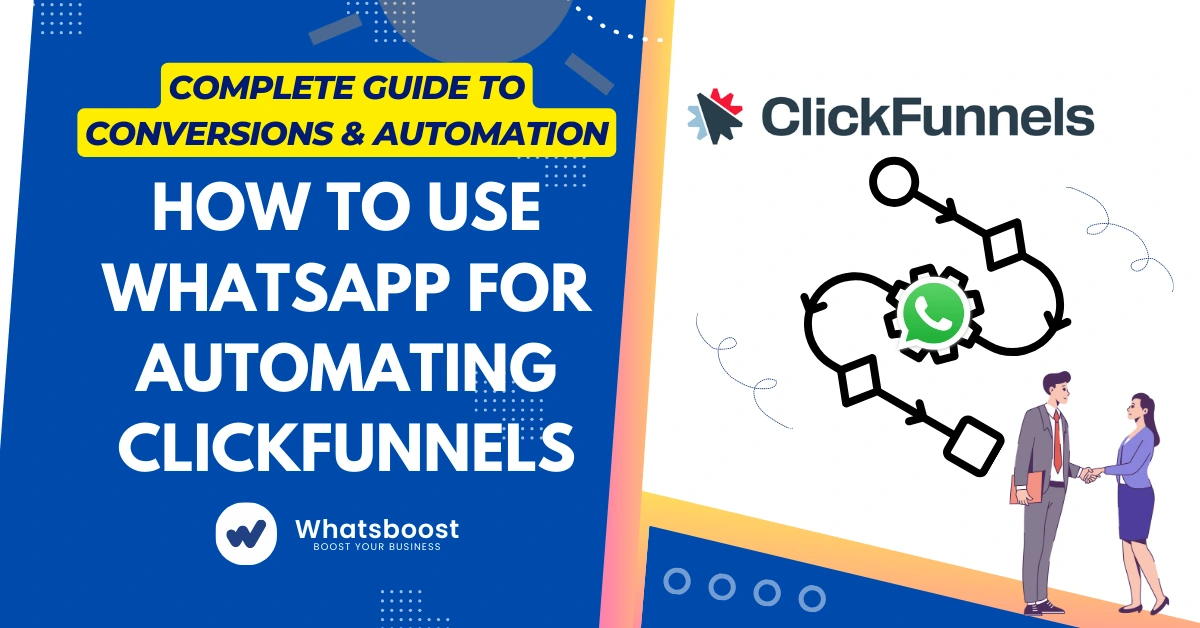
How to Use WhatsApp for Automating ClickFunnels: Complete Guide to Conversions & Automation
Learn how to use WhatsApp Automation for ClickFunnels to capture leads instantly, boost follow-ups, and increase conversions. Step-by-step setup guide with Whatsboost for free WhatsApp automation.
Automating ClickFunnels with WhatsApp: A Practical Guide
ClickFunnels is widely known for helping businesses build high-converting funnels. But even the best funnels struggle when follow-ups are slow or inconsistent. Leads may sign up, download a guide, or start a checkout process—but without immediate communication, many of them disappear before converting.
This is why many businesses are now combining funnels with instant customer messaging.
Instead of waiting for email responses or hoping a lead returns to your landing page, you can send a message the moment someone submits a form. That instant interaction dramatically increases engagement and keeps potential buyers interested while their intent is still high.
In this guide, you'll learn how to connect ClickFunnels with WhatsApp using automation tools like WhatsBoost, how to build automated follow-ups, and how to create messaging sequences that support your funnel conversions.
Why ClickFunnels Users Are Adding Messaging Automation
Most ClickFunnels users depend heavily on email marketing. But email inboxes are crowded, and response times are often slow. Messaging platforms, however, are opened almost immediately and feel far more personal.
When someone signs up through your funnel and receives an instant message, the experience feels responsive and human. Businesses that use automated lead follow-up sequences often see higher engagement because the conversation begins immediately.
Using messaging automation alongside ClickFunnels allows you to:
Respond to leads instantly
As soon as someone fills your opt-in form or registers for a webinar, they receive a message confirming their action and guiding them to the next step.
Nurture leads automatically
Many prospects need reminders before they buy or schedule calls. Automated sequences help you stay connected without manual effort.
Reduce funnel drop-offs
A large number of leads register but never return to complete the funnel. Messaging helps keep the conversation active.
Build trust faster
Compared to automated emails, a direct message feels far more personal and conversational.
Improve conversion timing
The period immediately after someone opts in is when they are most interested. Responding during this window can significantly increase conversions.
How Messaging Automation Works with ClickFunnels
ClickFunnels itself does not provide built-in messaging automation. However, businesses can easily connect their funnels with automation tools that trigger messages based on user actions.
The system works through webhook-based funnel integrations that connect ClickFunnels with automation platforms.
Here’s a simplified workflow:
A user submits a form on your funnel
ClickFunnels sends the data to an automation platform
The automation platform receives the lead information
A messaging sequence is triggered automatically
Follow-ups and reminders are sent based on timing rules
The sales team can view and respond to leads through a shared team inbox for customer conversations
This setup allows businesses to respond instantly while also keeping their funnel communication organised.
Step-by-Step: Connecting ClickFunnels to Messaging Automation
Step 1: Create an automation account
Begin by creating an account on an automation platform that connects funnels with messaging tools.
These platforms allow you to:
build automated messaging sequences
track and manage leads
assign leads to team members
bring all conversations into one dashboard
Most modern platforms offer no-code setup, making the process simple even for non-technical users.
Step 2: Set up your messaging API number
To automate messages at scale, businesses use official messaging APIs that allow automated notifications, reminders, and sequences.
With this setup, businesses can send confirmations, reminders, and onboarding messages automatically whenever a funnel event occurs.
Step 3: Connect ClickFunnels through webhooks
Inside your ClickFunnels dashboard, you can send lead information to your automation platform using webhooks.
The typical process includes:
selecting the funnel you want to automate
adding a webhook URL provided by the automation tool
choosing events such as form submissions or purchases
Once this is configured, every lead generated through your funnel is automatically transferred to the automation system.
Step 4: Build your messaging workflow
After the integration is complete, you can design sequences that trigger messages automatically.
Many businesses build workflows that include:
instant welcome messages
reminders after a few minutes or hours
webinar notifications
abandoned funnel reminders
product purchase confirmations
When managed correctly, this system becomes a powerful lead management and follow-up system that keeps prospects engaged throughout the funnel journey.
Popular Automation Use Cases for ClickFunnels
Messaging automation supports several powerful funnel strategies.
Instant lead confirmation
When someone submits their contact details, they receive a welcome message along with a resource, video, or booking link.
Follow-up sequences
Businesses often schedule follow-ups after:
5 minutes
1 hour
24 hours
48 hours
These reminders increase the chances of conversion.
Webinar reminder flows
ClickFunnels is frequently used for webinars. Messaging reminders help by sending confirmation messages, reminder notifications, and replay links.
Abandoned funnel recovery
If a user drops out before completing a funnel step, a reminder message can bring them back to finish the process.
Post-purchase engagement
After someone buys a product or service, businesses can send order confirmations, invoices, and onboarding instructions automatically.
Best Practices for Funnel Messaging Automation
To get the best results from automation:
Keep messages short and clear
Short messages are easier to read and receive faster responses.
Write messages like a real conversation
Messaging platforms work best when communication feels natural.
Balance automation with human responses
Automation should start conversations, but real people should continue them when needed.
Avoid sending too many reminders
Well-spaced messages perform better than constant notifications.
Track engagement behaviour
Understanding how leads respond helps refine your funnel communication.
Conclusion
Funnels are designed to capture leads and guide them toward a purchase. But without quick communication, many interested prospects simply move on.
Adding instant messaging automation to your funnel strategy helps businesses respond faster, nurture leads automatically, and maintain meaningful conversations with potential customers.
By connecting ClickFunnels with automation tools like WhatsBoost, businesses can create smarter follow-up systems that improve engagement and increase funnel conversions—without adding manual workload.
Want to automate WhatsApp for your business?
Set up campaigns, replies, and follow-ups in minutes.